


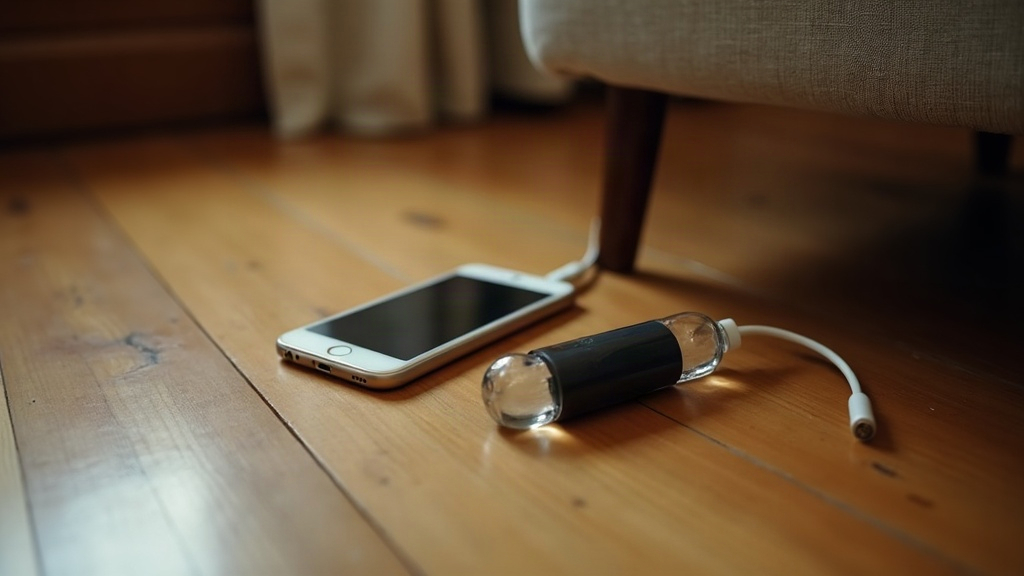
Every fall article on this site quietly assumes the same thing: that you get back up. You lie there a minute, you figure out your knees, you use the sofa, and you carry on. There is a second kind of fall, and it is the one people actually lie awake thinking about. You are on the floor. You are not badly hurt. And you cannot get yourself upright. Nobody is home.
That is the hour this piece is about.
Most of the work you can do for it happens while you are still well, and that is the whole point. The equipment, the phone, the key, the list of names - all of it is easier to arrange on a calm Tuesday than to improvise on the floor.
Why an Hour on the Floor Matters
Lying on the floor for a long time is not just uncomfortable. There is a name for it in the research: a long lie, usually taken to mean an hour or more on the ground after a fall, though there is no single agreed definition. The best-known study of it followed 110 people aged over 90 for a year and recorded 265 falls. Of the people who fell, 80 percent could not get up after at least one of them, and 30 percent had lain on the floor for an hour or more. Lying there a long time was strongly associated with serious injury, admission to hospital, and a move into long-term care.
Two details from that study belong in this article, because they change what you arrange. Eighty-two percent of the falls happened when the person was alone. And call alarms were widely available to the people in the study, and were not used in most of the falls that ended in a long lie - for reasons the researchers described as everything from believing it was not serious enough to not wanting to seem dependent.
So this is not a piece about being dramatic. An hour on the floor is a real medical event, and it gets worse the longer it runs. Which means the goal is simple: shorten the time between the fall and somebody knowing about it.
That does not require a subscription, a gadget, or a monthly fee. It starts with the phone.
The Floor-Level Phone
This is the single highest-value change in the article, it costs nothing, and most people have not made it.
Your phone lives on the kitchen counter, or on the arm of the sofa, or on the nightstand. All of those are at waist height or above. From the floor, none of them are reachable.
Put a phone where you can reach it from the floor. If you have a landline, that means a cordless handset on the bottom shelf of a low table, or on the floor beside your chair, in the room where you spend the day. If you use a mobile phone, it means a pocket, a lanyard around your neck, or a belt pouch - not the counter, not the other room.
The article on getting yourself off the floor already says this, and it is worth repeating here because it is the difference between a ten-minute event and a two-hour one. A person two feet off the ground with a phone in their pocket can call for help. The same person with a phone on the counter cannot do anything at all.
One small addition most people miss: a charging cable that reaches the floor. A phone that is at floor level and also dead is no better than a phone on a counter.
What Else Should Be Within Reach
Think about the hour, not the fall. If you are going to be down there, what do the next sixty minutes need?
- Water. A sealed bottle, capped, on the floor or on a low shelf you can reach. Dehydration is one of the reasons a long lie turns dangerous.
- A charged power bank and the right cable, if your phone is the tool you are relying on.
- A light. A small flashlight or a phone you can reach, because a fall at night in a dark hallway is a frightening place to be stuck.
- Something warm within reach. A throw blanket on the back of a low chair. If you are on the floor for an hour, you get cold faster than you expect.
None of this is expensive. Most of it is a matter of moving things from where they currently sit to where they would actually help.
The Rehearsal
The best way to know whether your plan works is to test it without falling.
Ask somebody to be in the house. Then get down on the floor on purpose - sit down, lie back, whichever is safe for you - and try to reach everything you have staged. Reach for the phone. Reach for the water. See how it actually goes.
Most people find at least one thing they assumed was in reach that is not. That is the entire value of the exercise, and it takes five minutes. You are not testing your strength. You are testing your arrangements, and arrangements are the part you can fix today.
This is the same move that balance training makes: practice the thing on purpose, calmly, with someone nearby, so the real version is not the first time.
What a Wearable Actually Does
The marketing oversells these devices, so it is worth knowing exactly where they stop.
Wearables and medical alert devices are genuinely useful. They are also not a guarantee, and the difference matters when you are deciding what to rely on.
Fall detection is not the same as a help button. A monitored pendant or wristband with a button asks you to press it. That is a deliberate act, and it works if you are conscious and can move your hand. Fall detection tries to notice the fall for you. It is a different feature, it usually costs extra, and it is less reliable than the button.
Fall detection misses falls, and the makers say so. Apple’s own documentation for the Watch states plainly that it cannot detect all falls. That is not a knock on the product; it is a limit of the technology. It reads motion, and some falls do not look like what it is looking for. It also depends on the watch being charged, worn snugly, and turned on for your age group - the setting is off by default for younger users and has to be switched on for older ones.
It also fires when nothing happened. Wearable users report false alarms from ordinary movements, and there is no sensitivity dial - fall detection is essentially on or off. Apple’s own guidance for people getting unwanted triggers is to narrow it to workouts only, which is the opposite of what someone at fall risk wants. So the trade is: a feature that protects you also occasionally calls your daughter at dinner.
A confused person can cancel it. This is the failure that matters most for our reader. On the Apple Watch, if the watch detects you moving after a fall, it waits for you to respond to the alert and will not call emergency services on its own. Only if it senses you have been still for about a minute does it make the call. Somebody who is hurt, disoriented, or simply embarrassed can tap the alert away - and the system will believe them. That is by design. It is also how a real fall goes unreported.
That does not mean do not wear one. It means do not wear one and call it a plan. It is a layer.
The threshold is different for a watch you already own. If you already wear a smartwatch, you are closer than you think: check that fall detection is switched on, that your age is set correctly in the health app, and that you actually wear it in the house. A device in a drawer is not a layer.
Choosing the Help You Will Actually Use
Here is the rule that saves the most money and the most pride: the cheapest option you will actually use beats the best option you will not.
There are four real choices, and they are not ranked by price.
A monitored medical alert service. A base unit in the home, or a mobile pendant, connected to a monitoring center that can call you through the device and dispatch help if you do not answer. The National Council on Aging puts the average at about $40 a month, with fees generally starting around $20 and running to $60 or more, and it notes that the cheapest end is a basic landline system while on-the-go units cost more (roughly $275 to $485 a year for in-home landline against $384 to $519 for on-the-go). Fall detection is usually an add-on and usually costs extra. Most major providers no longer require long-term contracts.
A wearable you already own. No monthly fee. It depends on you wearing it, it depends on cellular or Wi-Fi coverage for the call, and it depends on the call actually being made rather than canceled.
A daily check-in call. Free, and genuinely effective if the person on the other end actually notices a missed call. It has to be a real commitment on both sides - a call at the same time every day, and an agreement about what happens if it goes unanswered. A check-in that nobody enforces is a comfort, not a plan.
A neighbor with a key. Free, and faster than almost anything else, if the neighbor is home. Most people have one person they would trust with this and have never asked.
You can combine these. The phone at floor level sits under all of them.
One thing to know about Medicare before you shop: Original Medicare does not cover medical alert systems, and Medicare’s coverage pages are where to check what your own plan does. It classifies them as convenience items rather than medically necessary equipment, so you pay the full cost yourself. Some Medicare Advantage plans include them as an extra benefit, and some state Medicaid programs help - but this is not guaranteed, so check your own plan’s materials rather than assuming either way.
The Door
There is a detail that turns a good plan into a useless one: the locked door.
An ambulance crew that arrives at a locked house cannot get in. They will force entry if they believe someone’s life is at risk, and most people would rather they did - but it means damage, delay, and in some places a judgment call about whether this counts as enough of an emergency.
Two things fix it. Leave a key with the neighbor who is part of your plan, or use a lockbox - a small key safe mounted outside that emergency responders can open.
Lockbox programs vary by place. Some fire and police departments run their own for residents who live alone or have a medical condition, which lets responders get in without breaking a door. Many departments use a standard responder key box, and some cities have expanded these programs in recent years. Call your local fire department’s non-emergency line and ask whether a program exists where you live and how to join. It is a ten-minute question with a real answer.
What to Say When You Call
The call itself is where people lose time, usually by being polite.
Be specific, and lead with the facts a dispatcher is trained to act on:
“I have fallen and I cannot get up. I am on the floor at [your address]. I am [name], I am [age], and I cannot stand.”
Then add the two things that change how fast they come:
- What hurts, and whether you hit your head. A head strike moves this up the list even if you feel fine.
- Your medications, especially blood thinners. Have the list within reach, or in your phone, so you are not reciting from memory while lying on the floor.
If you can unlock the door from where you are, say so. If you cannot, say that too - it tells them what to expect and lets them prepare.
Keep a short written card with your name, address, medications, allergies, and who to call, and keep a copy in the room where you spend the day. The paramedic is going to ask. Reading is easier than remembering.
The Conversation With Your Family
This is the part people avoid, and it is the part that makes everything above work. Because help is only useful if somebody knows to look for you.
The framing that works is not “I need watching.” It is “here is the plan, and here is your part in it.” You are assigning a job, not asking for supervision.
Three things to settle out loud:
Who is called first, and who is called second. Say the names. Make sure those people know they are on the list, and that they have your address and a key or the code to the lockbox.
What the daily rhythm looks like. A good-morning text, a call at a set time, a neighbor who notices the curtains are still closed. Pick one that fits your life, not one that sounds thorough on paper.
What you have decided about equipment. If you have chosen not to wear a pendant, say so and say why. It stops the conversation from being relitigated every visit, and it keeps the decision yours.
Then write it down. One page, in with your important papers, and tell your family where that page lives.
The Rest of the Pile
This piece covers the hour after the fall. Four questions come before it, and the site has an article for each.
Why you fall at all. Measuring your balance properly and the grip test tell you where you actually stand, rather than where you assume you stand. The grip test takes a minute and a bathroom scale.
What is making it likelier. Some medicines quietly raise the risk, and a medication review is a conversation with a pharmacist rather than an afternoon of research.
How to stop it happening at home. Fall-proofing the house is mostly a walk around the rooms looking at the floor, and the outdoor version matters more in the months when the ground is wet or icy.
And the one that stops people leaving the house. Fear of falling does its own damage, because the cure it suggests is doing less. The documents worth having ready are in the fall shot list.
What to Do This Week
- Move a phone to floor level in the room where you spend the day. Today, and add a charging cable that reaches.
- Stage the small things. Water, a light, a power bank, a blanket - within reach of the floor, not across the room.
- Get on the floor on purpose, with someone home, and try to reach all of it. Fix whatever fails the test.
- Check any wearable you already own. Fall detection on, age set correctly, worn in the house.
- Ask your local fire department whether they run a lockbox program, and ask the neighbor you trust most whether they would keep a key.
- Write the one-page card - name, address, medications, allergies, who to call - and put a copy where you would need it.
The point of all of it is not to think about falling more. It is to make the worst hour of a bad day into a short one.
This piece is the companion to getting yourself off the floor - that one teaches the skill, this one covers the day the skill is not enough. And if the fall involved a knock to the head, treat that separately from everything in this article: a head strike gets checked, even when nothing hurts.
Disclaimer: I am not a doctor, a paramedic, or a home safety assessor. I am a grandmother who has arranged her own house around this problem and learned most of it from people who fell before I did. Prices and program details change - check them where you live before you buy or arrange anything.
If this helped, there is more where it came from. The Basic Hub sends one practical guide a week - no spam, no jargon. Sign up below so the next one finds you.