


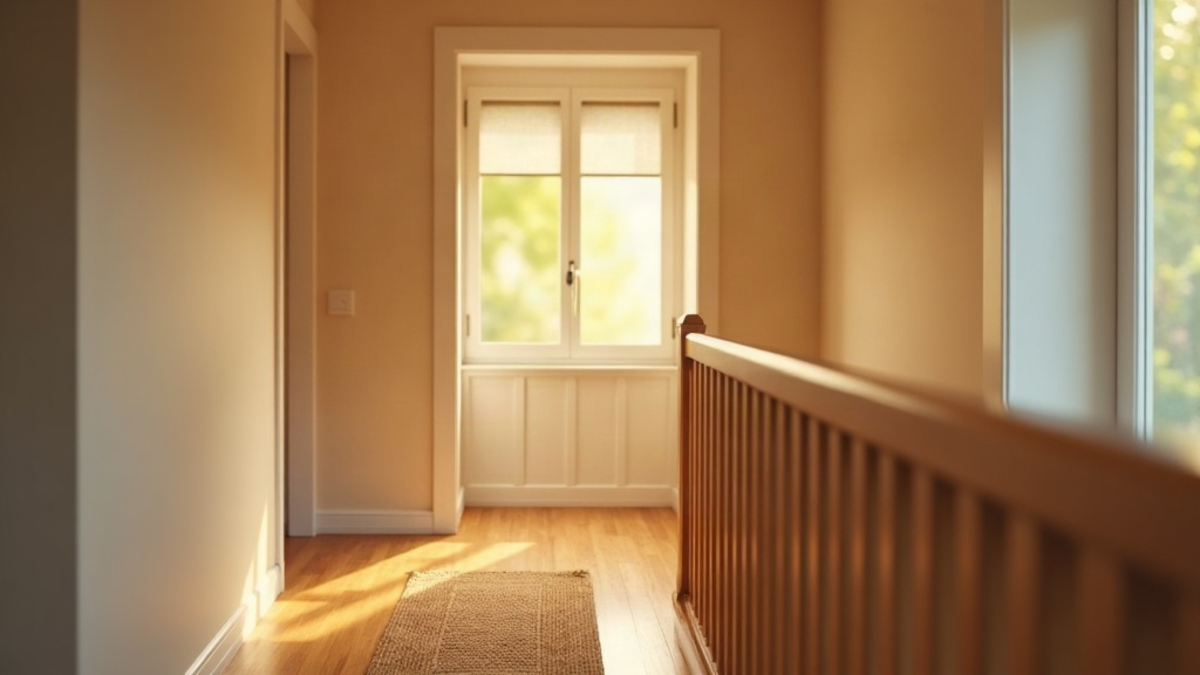
Most falls happen at home. Not on an icy sidewalk, not on courthouse steps, not on a hiking trail. At home - in the hallway you walk in the dark, on the rug you have shuffled past a thousand times, in the bathroom at 2 a.m. And perhaps surprisingly, the house is the one piece of the fall puzzle you can fix in a single afternoon.
Last week I showed you how to check your balance in the kitchen - three one-minute tests that tell you where you stand. That is the body half of the problem. This is the house half. Falls Prevention Awareness Week runs September 21 to 25, and if you do this walkthrough before then, you will be ready in a way most people never manage: you will have looked at your home the way a fall would.
Why the House Matters More Than You Think
Falls are the leading cause of injury-related death for people over 65, and about one in four older adults falls every year. Here is what the statistics do not say: most of those falls happen on level ground, in familiar rooms, during ordinary moments. Nobody trips over a mountain in the living room. They trip over the edge of a rug.
The balance tests told you where your body stands. This walkthrough tells you where your house stands. Together they cover both halves of the fall equation - and you can do the house half this afternoon.
The Five Things You Are Looking For
You are not renovating. You are not emptying closets. You are walking one room at a time with one question in mind: what could trip me, and what could I grab?
Almost every home fall traces back to one of five things:
- Rugs - edges that curl, corners that catch, slips on bare floors
- Cords - lamp cords, phone chargers, extension cords crossing the path
- Light - dark hallways and unlit paths, especially at night
- Reach - things stored where you have to stretch or climb
- Grip - surfaces with nothing to hold onto
That is the whole checklist. Five words, one afternoon.
The Entryway and the Hallways
Start at the door, because that is where the walking starts. Shoes pile up by the entrance, bags get set down mid-path, and the mail lands on the floor because the table is full. Every one of those is a thing to step over.
The fix is not a bigger closet. It is a clear path. Decide on one route from the door to your chair, and keep that route empty. Everything else can live anywhere it wants, as long as it is not on the walking line.
Then look down the hallway at night. If you cannot see the far end clearly, put a nightlight at the end of the hall. A dark hall is one you will navigate by memory - and memory is exactly what fails at 2 a.m.
The Living Room: Rugs and Cords
The living room is where the classic fall hazards live. Area rugs sit on top of hardwood or tile, their edges curl up after a few years of vacuuming, and every edge is a little ramp for a toe.
You have three options for any rug you walk on. Remove it. Tape it down with rug tape made for the job - the kind that grips the floor, not the kind that grips nothing. Or fold it up and store it, and let the floor underneath be the floor. What does not work is what most of us do: nothing, and a silent hope that the edge flattens out on its own. It has been curling for three years.
Cords are the second classic. A lamp cord running across the walking path is a tripwire at ankle height. The fix is ten minutes of work: run cords along the wall, behind furniture, or under a cord cover. If a cord has to cross a path, tape it flat with tape made for the job - and treat that as a short-term fix, because the real fix is moving the outlet or the lamp.
One more thing while you are in there: check the route you actually walk, not the route you think you walk. The low coffee table is fine until you take the shortcut past it in the dark. If you cannot move the table, add a light so the corner is visible.
The Kitchen: Reaching and Spills
The kitchen has its own two hazards, and neither one is the stove.
The first is reach. The good plates live on the top shelf. The mixing bowls live over the fridge. The mug you want is on the top row, and the step stool is in the laundry room, and the chair is right there, and you are fifty-eight years old and you know better, and you climb anyway. That is how the kitchen fall happens.
The fix is a rule: everything you use weekly lives between your shoulder and your hip. Move the daily things down to that band. Keep one sturdy step stool in the kitchen - a real one with a handle, never a chair - and put it where you can see it, not in the laundry room. If a thing is out of reach and you are on a chair to get it, stop. Whatever it is, it is not worth the fall.
The second is the floor. A spill on a smooth floor is a skating rink until someone mops it. Wipe up spills when they happen, not when the cooking is done. And check the mats you stand on: a kitchen mat with a curled corner is a rug hazard wearing a disguise. If the mat slides, put a nonslip pad under it, or get rid of it.
The Bathroom: The Room That Decides
If I had to name the room where falls do the most damage, it is the bathroom. It is small, it is hard-surfaced, the floor gets wet, and the surfaces to grab - the towel bar, the soap dish, the edge of the sink - were not built to hold a person. When you slip in there, there is often nothing to catch you. This happened to me, in Vietnam, where every floor seems to be marble. I fell and broke my elbow in the shower.
The fix starts with grip. A real grab bar, installed into the wall studs, next to the toilet and in the shower, is the single best thing you can do in this room. If you rent, or you cannot drill into tile, there are still good options: a sturdy shower chair, a non-slip bath mat with suction cups, and a basket that keeps your shampoo at waist height so you are not bending and reaching on a wet floor.
I now always wear grippy shower sandals when on any wet floor, especially in the shower itself.
Two more small fixes while you are in there. Put a nightlight in the bathroom outlet, because the middle-of-the-night trip is the most common one. And replace the towel bar as a handhold in your mind: if you grab it and it gives, you have learned something important before the fall, not after.
The Bedroom and the 2 a.m. Trip
The bedroom hazard is not the bedroom itself. It is the path from the bed to the bathroom, taken half asleep, in the dark, on feet that have not woken up yet.
Make that path the safest ten feet in your house. A nightlight in the bedroom outlet and one in the hall. Nothing on the floor between bed and door - slippers count, so keep them at the side of the bed where you can step into them. A phone charger that does not require crossing the room to use. And a flashlight on the nightstand for the nights when the power goes out, because the 2 a.m. trip in a blackout is the worst version of the 2 a.m. trip.
One bedroom note for the morning side: if getting out of bed has become a roll-and-push operation, that is a body conversation, and the strength series on this site has the answers - Strength After 60 is where to start. The house part is simpler: keep the path clear, and keep the light on it.
If You Have Stairs
Stairs deserve their own paragraph because they are the one place a fall is not just a fall. The rules are old and they are true: a handrail on both sides if you can manage it, nothing stored on the steps, a light switch at the top AND the bottom, and a contrasting edge mark on each step so the depth reads clearly in dim light.
If you have stairs and you are wobbling on the balance tests from last week, have the conversation now, not after a fall: is the bedroom on the second floor the right bedroom? Moving the bed downstairs is not giving up. It is the same decision as the rug - you are taking the trip wire out of the path.
Conversely, I found that having a downstairs bedroom with en-suite meant that I lost much of the ability to actually climb stairs when needed. Now I live in a house with the bedrooms upstairs, and with a few weeks of slow, careful practice, and plenty of sit-to-stand exercises, I now go up and down with ease, though still carefully.
The Visit: For the Person You Worry About
This walkthrough is for your own house, but you already know who else needs it. When you visit your parents next, take the tour with the five words in your head. The bathroom is the first place to look: does the tub have a mat, is there anything to grab near the toilet, can they reach their shampoo without bending?
Do not turn the visit into an inspection. Turn it into a favor: “I saw these nonslip strips for the tub and got you a set as well.” One small fix per visit beats one big lecture, and it gives you a reason to look each time. If the money side of a parent’s independence is on your mind, the guide to stepping in without taking over covers the conversation part of this.
What to Do Now
- This afternoon, do one room. Not all of them. The bathroom if you can, or the bedroom 2 a.m. path. One room done is a win you can enjoy.
- Fix the rug first. Of everything in this article, the curled rug edge is the most common fall I know. Tape it, fold it, or move it - this afternoon.
- Light the night path. Two nightlights and a clear floor between bed and bathroom. Ten minutes, and the most dangerous trip of your day becomes the safest one.
- Check the grip in the bathroom. If you can grab the towel bar and it moves, you have found your answer. A real grab bar is a weekend project that pays for itself the first time you need it and it holds.
- Mark September 21 on the calendar. Falls Prevention Awareness Week starts that Monday. By then, your body tests are done and your house is walked through - you will be the rare person who is ready for the week before it starts.
You cannot stop every fall, and you do not need to. The balance tests handle the body half, the walkthrough handles the house half, and the two together are what ready looks like. Most falls happen at home - which means most falls happen somewhere you can do something about.
Disclaimer: I am not a doctor. I am a grandmother who has had to figure this out the hard way - the falls, the stiff mornings, the chairs that got harder to get out of. Check with your doctor before starting anything new, especially if you have existing health conditions or take medicine that makes you dizzy.
If this helped, there is more where it came from. The Basic Hub sends one practical guide a week - no spam, no jargon. Sign up below so the next one finds you.